Heartbeat Review (2026): Hands-On Analysis
Heartbeat is our “Discord-style structured communities” pick: structured, Discord-style communities built for creators and cohorts. Less suited if you want an established all-in-one with built-in courses and marketing.
Key Takeaways
In 2026, Heartbeat is a solid chat-first community platform that works as a modern Discord alternative with built-in channels, events, and simple course hosting, best for cohort communities, coaching memberships, and fandom groups.
This heartbeat review is based on hands-on testing: building a small paid community, running events, loading course content, and comparing the experience to tools like Skool, Circle, and Discord.
Heartbeat pricing uses a tiered subscription model with a free plan for small communities; always check the vendor's site for the latest figures and member caps.
Pros include chat-style channels, events with RSVP tracking, gamification, a mobile app, and an automation-first approach. Cons include fewer native integrations, lighter course features, and a smaller ecosystem than long-standing competitors.
For most creators building a course-first membership site in 2026, Skool will usually be the better long-term fit. Heartbeat is ideal if you want a structured, conversation-driven community with better member engagement tools than Discord offers out of the box.

Heartbeat review (2026) in brief
Heartbeat is worth considering if you want a structured, Discord-style community platform with built-in chat, events, and light courses. It is less ideal if your priority is an all-in-one course platform with native email marketing, funnels, and advanced analytics.
In one line, Heartbeat is a chat-first, Discord-style community platform with channels, events, and simple courses for paid communities and cohorts.
Best for: cohort-based programs, coaching memberships, and fandom groups. Imagine you run a k drama watch community where fans dissect every episode of a show like the kdrama Heartbeat - a drama about a vampire named woo hyeol navigating the human world. The show is described as silly, funny, and charming, and it features fish-out-of-water humor with its vampire protagonist. A community like that thrives on live conversation, events, and more posts around weekly episodes, and that is exactly what this platform handles well. The show itself balances humor with poignant themes, and your community discussions can mirror that range. It is also well suited for indie coaches, mastermind groups, or any creator whose product is the conversation.
Less suited if: you need deep marketing features, advanced quizzes, certifications, or a polished all-in-one course experience. Heartbeat has a free plan in 2026 that lets you test channels, events, and member engagement features before upgrading, though advanced features and higher member counts sit behind paid tiers.
Compared to competitors, think of Heartbeat as a cleaner alternative to Discord, simpler than Circle in some ways, but less fully featured than Skool for running a course-centric membership site.
What is Heartbeat? (Entity definition)
Heartbeat is a hosted community platform that combines chat channels, Zoom-style events, basic course hosting, and member management in one interface, mainly used for paid communities, cohort programs, and private groups. Heartbeat is an all-in-one platform for online community management, designed for creators, coaches, and educators who want everything in a single place.
Unlike a traditional course platform such as Thinkific or Teachable, Heartbeat is community-first: the real-time chat and channels are the core, and lessons, resources, and events plug into that hub. Heartbeat combines live chat, forums, events, courses, and content libraries in a way that makes it effective for building engaged communities rather than just forums. Users appreciate the value of consolidating tools into a single platform with Heartbeat.
The user experience feels familiar to Discord or Slack users, with sidebars for channels, DMs, and events. You get a web app plus iOS and Android mobile apps. The platform is suited for online courses, membership communities, and coaching programs equally.
In 2026, Heartbeat is younger and smaller than incumbents like Circle or Skool, with a growing but not yet mature ecosystem of integrations, templates, and how-to content. Typical communities on Heartbeat include coaching cohorts, indie course communities, startup mastermind groups, and fandom clubs - for example, woo hyeol watch parties where fans discuss the storyline of a vampire trying to understand life as a human, debating whether the male lead is a nice guy or just hopelessly clueless.
Posts live inside channels as threaded conversations, avoiding the endless scroll problem of classic chats. This helps for long discussions about episodes, lessons, or weekly prompts - whether your members are talking about the main female lead in a drama or analyzing a coaching framework. Heartbeat is fully hosted and runs on a subscription model with an optional free plan, so you never manage servers or software updates.
Heartbeat key features: what you actually get
Heartbeat's standout features are its chat-style channels, structured spaces, events calendar, light course hosting, and built-in member engagement tools, all wrapped into web and mobile apps. Heartbeat features strong community engagement tools including discussion threads and events.

Spaces and channels
You can create spaces for different programs or sub-communities. Within each space, set up channels with granular access rules. For example, a k drama fan community might have channels for episode discussions where people talk about scenes they love, a channel for hae sun character analysis, and a wins channel. Community builders praise Heartbeat for its clean UI and automation features, and those channels are where that sense of structure really shows.
Chat and posts
The chat-first design is similar to Discord, but with thread support and rich posts including images, embeds, and documents. This makes it easier to keep track of more posts over time so important conversations do not vanish in the scroll. Users report Heartbeat offers a modern and intuitive user interface that feels natural for members who prefer real-time dialogue over static feeds.
Events and live sessions
Heartbeat is highly regarded for its event-centric features. You can schedule live calls, recurring events, or watch parties, sync them to member calendars, and connect to Zoom or native video. Heartbeat integrates with multiple third-party services including Zoom and Google Calendar. Event management tools include scheduling and RSVP tracking, which is useful whether you run weekly office hours or live breakdowns of the latest drama episode. Imagine hosting a watch party where fans are waiting for the moment woo hyeol's affection for in hae grows as he learns about love, then jumping into a voice room right after to talk about Taecyeon's comedic timing, which is highlighted as a strong point of the show. Woo hyeol's comedic timing enhances his dynamic with in hae throughout the series, and that kind of fun, real-time reaction is exactly what Heartbeat's events are built for.
Courses and learning content
Heartbeat supports both static and cohort-based learning formats. You get built-in course hosting, but it is relatively lightweight - good for structured lesson lists, embedded videos, and PDFs, but not as deep on quizzes, certificates, or drip campaigns as specialized course platforms. If you want to create a six-week storytelling course analyzing how woo hyeol and in hae's relationship develops gradually over time, or how in hae expresses her feelings for woo hyeol in episode 11-12, you can structure that as a cohort course with weekly lessons. The show features an open ending regarding woo hyeol and in hae's love story, which gives your students plenty to debate. However, for heavy assessment or certification needs, a dedicated LMS will serve you better.
Gamification and engagement
Heartbeat simplifies community management through an automation-first approach with tools like badges, access groups, and workflows. You can reward posting, commenting, or attending events. Give bonus points to members who post thoughtful analysis - for instance, why in hae's jealousy over woo hyeol's past indicates her feelings for him, or whether the tone shifts from light-hearted to more serious in the second half of the drama. Heartbeat features AI integration through an assistant named Pulse, which helps you scaffold onboarding flows and gamification rules quickly.
Member profiles, DMs, and directories
Heartbeat offers community management features including member directories, profile fields, DMs, and group DMs for networking. This supports the idea of community as a product for paid memberships or mastermind groups where people genuinely want to talk to each other.
Integrations
Heartbeat connects to Stripe for payments, Zapier for email and CRM tools, and has calendar integrations. But there are fewer native integrations than older tools, so you may rely more on Zapier or webhooks. Heartbeat allows custom branding for a professional user experience on higher tiers.
Mobile app
Members can join channels, RSVP to events, and watch course content via the Android and iOS apps. Users report occasional bugs and glitches particularly in mobile apps, but overall the mobile experience makes Heartbeat a usable Discord alternative for communities that live on their phones.
Admin tools
You get moderation controls, member roles, and analytics showing active users and top channels. Users report a steeper learning curve for administrators compared to members, and the analytics are more basic than enterprise platforms. Users frequently mention the need for improved customer support responsiveness as well.
Heartbeat gives you almost everything you need to run a community-centric membership site in a single, relatively simple interface, as long as you are okay using separate tools for heavy-duty email marketing or complex course flows.
Heartbeat pricing and free plan (2026)
Heartbeat uses a tiered subscription pricing model that scales based on features, member count, and community size. In 2026, there is also a free plan that lets you run a small community and test core features before paying. Heartbeat supports monetization options like tiered memberships and in-platform purchases.
The structure follows a familiar pattern: an entry-level paid plan for smaller communities, mid-tier plans that unlock more members and advanced features like white-label emails, and a top-tier plan aimed at larger paid communities or businesses needing branded apps and custom domains.
Prices and limits change over time. Visit Heartbeat's official pricing page for up-to-date figures, member caps, and included features rather than trusting any screenshot or outdated heartbeat review.
The free plan generally includes access to spaces, channels, events, and basic member management, with limits on member counts or advanced automation. It is enough to prototype a community or run a small free group. You can upgrade or downgrade easily within the app, so you can start a cohort on the free plan, then move to a paid tier once you sell seats.
A practical tip: map your expected growth and check how it lines up with each pricing tier, then compare what Skool or Circle would cost at the same scale for equivalent features.
Heartbeat pros and cons: strengths and limits
Based on real use running a small cohort community and testing events, chats, and courses, here is where Heartbeat shines and where it falls short in 2026.
Pros
Chat-first, Discord-like feel that members instantly understand
Structured spaces and channels that avoid the chaos of raw chat
Solid events system with recurring scheduling, RSVP, and multi-host support
Simple course hosting that works for cohorts and evergreen content
Good member engagement and gamification tools
Working mobile apps on iOS and Android
A free plan to get started without risk
Pulse AI assistant speeds up setup for beginners
Cons
Younger than Circle and Skool with a smaller ecosystem of integrations and templates
Fewer native integrations, requiring more reliance on Zapier
Course features feel basic compared to a dedicated course platform - fewer quiz types, lighter certificates
No built-in email sequences or sales funnels
Some rough edges in UX compared to more mature platforms
Rapid iteration means the interface changes more often than stable tools, which can be a bit annoying for admins who just want stuff to stay put
Migration and user opinions
Migration from Discord, a Facebook group, or another platform is possible but not fully automated. Plan for manual steps and the effort of onboarding your members to a new app.
In community circles, power users praise Heartbeat for simplifying member engagement versus Discord. But some course creators still prefer Skool or Circle because they prioritize course layouts and marketing funnels over real-time chat. Viewer opinions on the platform are mixed in a way that mirrors how fans discuss the kdrama Heartbeat itself - some found the first episode cringey and slow, while others stuck around and discovered something genuinely entertaining. The show has been criticized for poor writing and character development by some viewers, and some expressed frustration with the show's ending, calling it forgettable. But honestly, many viewers found the humor and the way woo hyeol's character evolves from powerful to vulnerable to be the important thing that kept them watching. In hae's straightforward nature contrasts with woo hyeol's cluelessness, and the OTP connection develops gradually and organically throughout the series. In hae shows empathy towards woo hyeol's struggles as a vampire, and that sense of genuine connection is what makes both the show and a good community platform worth the investment. Imo, if you feel bored by a platform that is too predictable, Heartbeat's rapid development keeps things fresh - for better or worse.
Heartbeat is a strong fit if you care most about live community energy and structured conversations, and a weaker fit if your primary product is a polished, evergreen course needing advanced learning paths and integrated email marketing.
Who Heartbeat is (and isn't) for
In 2026, Heartbeat is best for community-centric creators who want a modern Discord alternative, and less suited if you need a full all-in-one course platform with built-in marketing, upsells, and deep analytics.
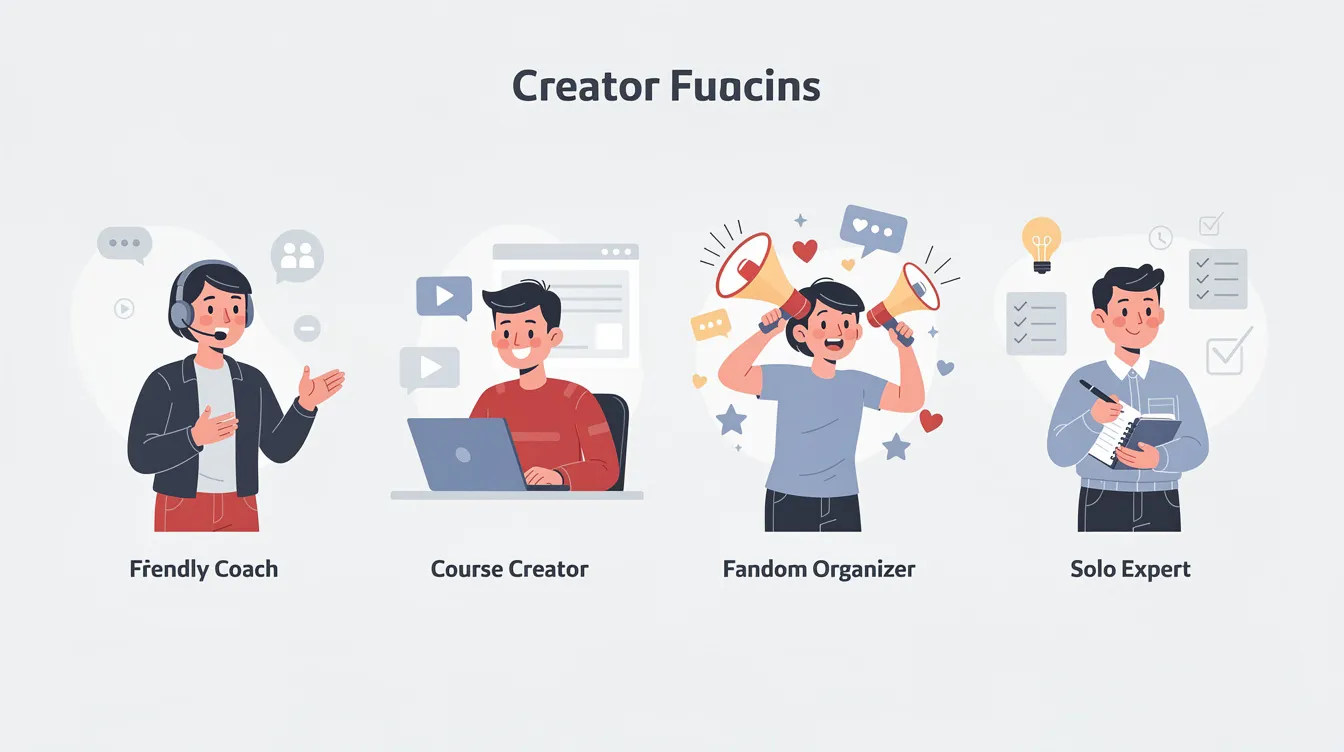
Cohort-based course creators
If you run live cohorts with weekly calls and active discussion - say a six-week course analyzing how the genre of a k drama like Heartbeat uses comedy and drama, where the male lead woo hyeol learns about the rest of the world after waking from a hawthorn coffin, deals with blood cravings, and ends up at a hospital trying to play human - then Heartbeat's channels and events make a solid home for your students. You could spend an entire season dissecting how kim hae sun's character arc mirrors real-life relationship dynamics, how the actors bring cute and funny moments to a story about a vampire and a human living under the same house, or whether the dialogue between woo hyeol and in hae sounds natural or forced. Some guys in your community might wonder about the father subplot or get angry about a complicated affair in the storyline, while others just want to laugh at the silly scenes and fall in love with the characters. That kind of lively, unpredictable engagement is what Heartbeat handles best.
Community-first membership site owners
If your main value is ongoing conversation, accountability, and Q&A rather than a giant video library, Heartbeat's chat and gamification help keep members engaged. The platform makes it easy to post comments, share a moment of insight, or just talk about whatever is on your mind.
Groups migrating from Discord or Slack
If you hate Discord's chaos or Slack's work vibe, Heartbeat offers familiar real-time chat with better structure for courses and events, plus a cleaner interface for non-techy friends who just want to participate without feeling stuck.
Indie coaches and solo experts
Solo coaches can use Heartbeat's free plan to host a small private group, then scale up. For the sake of simplicity, you can treat lightweight courses as a resource library for clients and let the real power of the platform be the conversations.
Who Heartbeat is not for
Creators who want an all-in-one course plus email plus sales funnel system; teams needing dozens of enterprise integrations; education businesses requiring SCORM, detailed quizzes, or complex reporting. If your primary product is a course with a community on the side, Skool is usually the better long-term choice. If your primary product is the community itself, Heartbeat makes more sense.
A final pointer: sketch your ideal member experience - how often you will post, run events, and release lessons - then choose based on whether community-first or course-first better matches that vision. Do not just chase generic best platform rankings in the past without testing for yourself.
Conclusion: is Heartbeat the right choice for you?
Heartbeat is a strong Discord alternative with channels, events, and simple courses, ideal in 2026 for community-centric memberships and cohorts that live on chat and live sessions. It is a sound choice for anyone whose primary product is conversation and connection.

That said, Heartbeat is not the top pick for most course-first creators. If you want a clean course experience, built-in marketing, and a larger ecosystem, Skool tends to be the better long-term choice, especially for classic course-plus-community setups where you need everything under one roof.
To decide, list your non-negotiables - mobile app, Discord-style chat, native courses, email automations - and compare Heartbeat, Skool, and your current tools against that list. Do not get stuck chasing the perfect platform in the abstract. The best way to know is to try it: spin up a small test community on Heartbeat's free plan, invite a handful of trusted members or friends - maybe for a woo hyeol discussion group, a coaching circle, or any idea you have been sitting on - and judge the experience yourself before committing to a paid tier. You have nothing to lose and a world of community-building to gain.
Frequently asked questions
Heartbeat is worth it if you want a chat-first, Discord-style community with strong channels and events, and you are okay pairing it with other tools for marketing. It is less worthwhile if you mainly need a polished all-in-one course platform with built-in email and funnels. For the right use case, it delivers real value. For the wrong one, you will end up frustrated and wishing you had picked a different tool.
Heartbeat uses tiered subscription pricing that scales with features and member counts. Plan names, limits, and prices change over time. Check Heartbeat's official pricing page in 2026 for the latest details on plan tiers, member caps, video hosting hours, and add-ons rather than relying on any third-party heartbeat review for exact figures.
Yes, in 2026 Heartbeat offers a free plan designed for small communities and testing core features like channels and events, with limits on members or advanced options. Some periods may also see limited-time trials on paid tiers, so verify what is currently available on the site. The free plan is enough to run a small group and see if the platform fits your needs.
Heartbeat is generally friendly for solo creators. The UI is easier than Discord for many non-techy users, the free plan lets you experiment, and setup is manageable alone with help from the Pulse AI assistant. Beginners needing heavy marketing automation or a full course experience from day one may prefer Skool or another all-in-one tool that handles the end-to-end journey.
Versus Discord, Heartbeat offers more structure, events, and basic courses tailored to paid communities. Versus Skool, it is more chat-centric but less polished for course delivery and marketing. Your choice depends on whether you prioritize real-time community engagement or a course-first membership model. Neither is terrible; they just serve different needs.
Yes, Heartbeat has mobile apps for both iOS and Android. Members can join channels, RSVP to events, view course content, and send DMs from their phones. Admin features are more limited on mobile - you will need the desktop or web app for advanced setup like billing, offers, and community settings.